
Féach arís.
Cad a fheiceann tú?

The Tenth Man asked me to create a series of photographs exploring how learning Irish helps you see the world in a new way as part of an OOH campaign for TG4. It was a rare period of creative exploration and freedom, and I’m going to tell you about it now. I have long been fascinated in the power of oral storytelling in ancient cultures from the San in South Africa to the Irish tales of the Otherworld, and how these stories helped guide people through their environments.
I started researching language and its effect on the human brain, explored Irish folklore, and pulled together a very nerdy treatment featuring some interesting techniques to experiment with finding hidden colour in organic ways, and to explore the colour concealed in time and language.
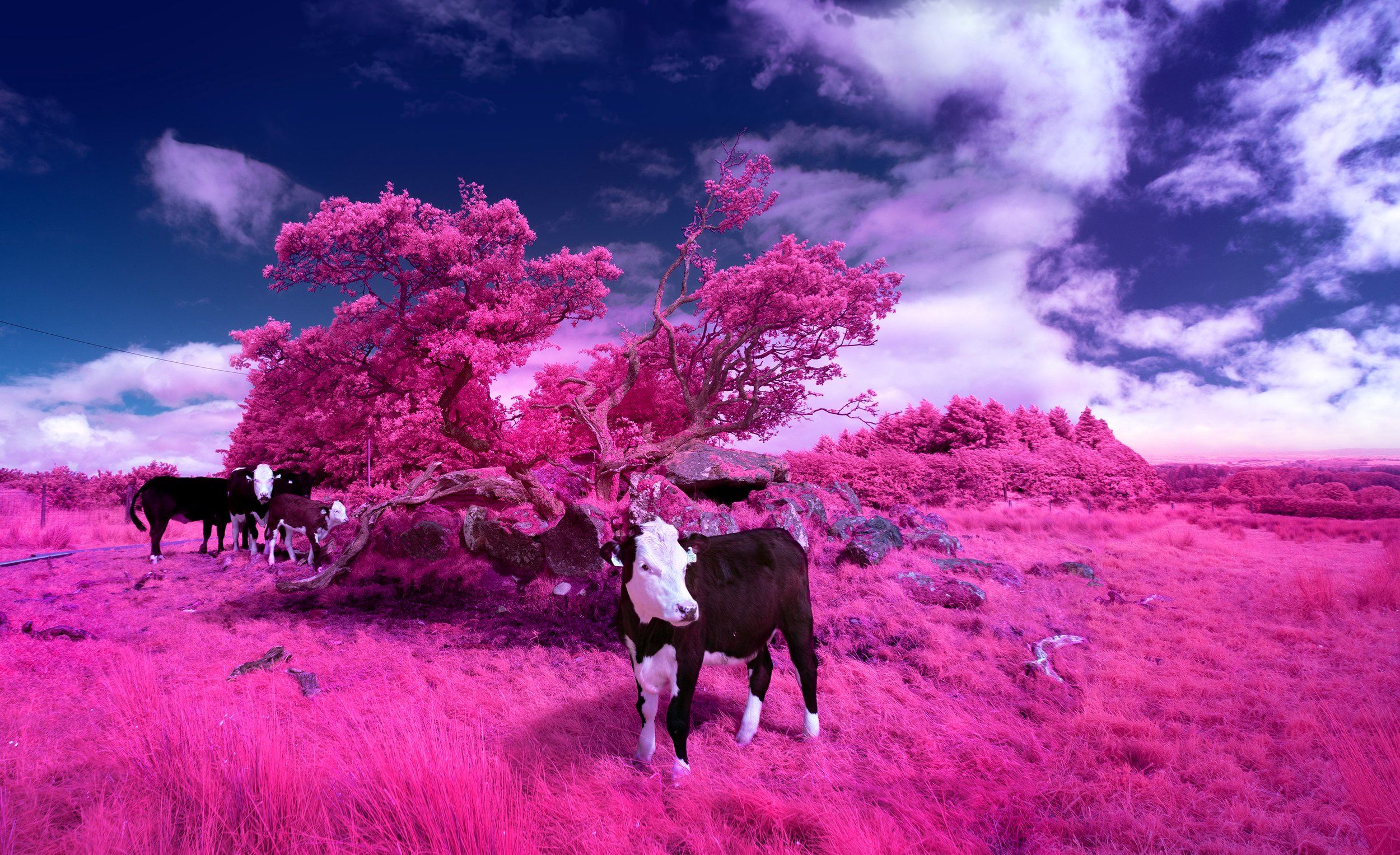
Image 1 | The Hawthorn Tree
For the first photograph I wanted to shoot a hawthorn tree, because they’re known as gateways to the Otherworld. Cutting down a fairy tree is said to bring severely bad luck, illness, or even death, so you often see them standing alone in a field when everything else has been cleared for farming. I found an absolute specimen growing out of a wedge tomb in Loughmacrory in Co. Tyrone in Northern Ireland.
After a lot of research I purchased a second hand Canon EOS R, had the IR filter ripped out, got a IR550nm filter to exclude visible light and really contrast the living chlorophyll and the ancient rocks of the wedge tomb. I spent 10 hours in the field, waiting for a glimpse of sun to provide the infrared light. Post for this one was simple enough, a quick blue/red channel swap to get the colour right, leaving the sky a natural shade of blue while rendering the leaves bright pink.
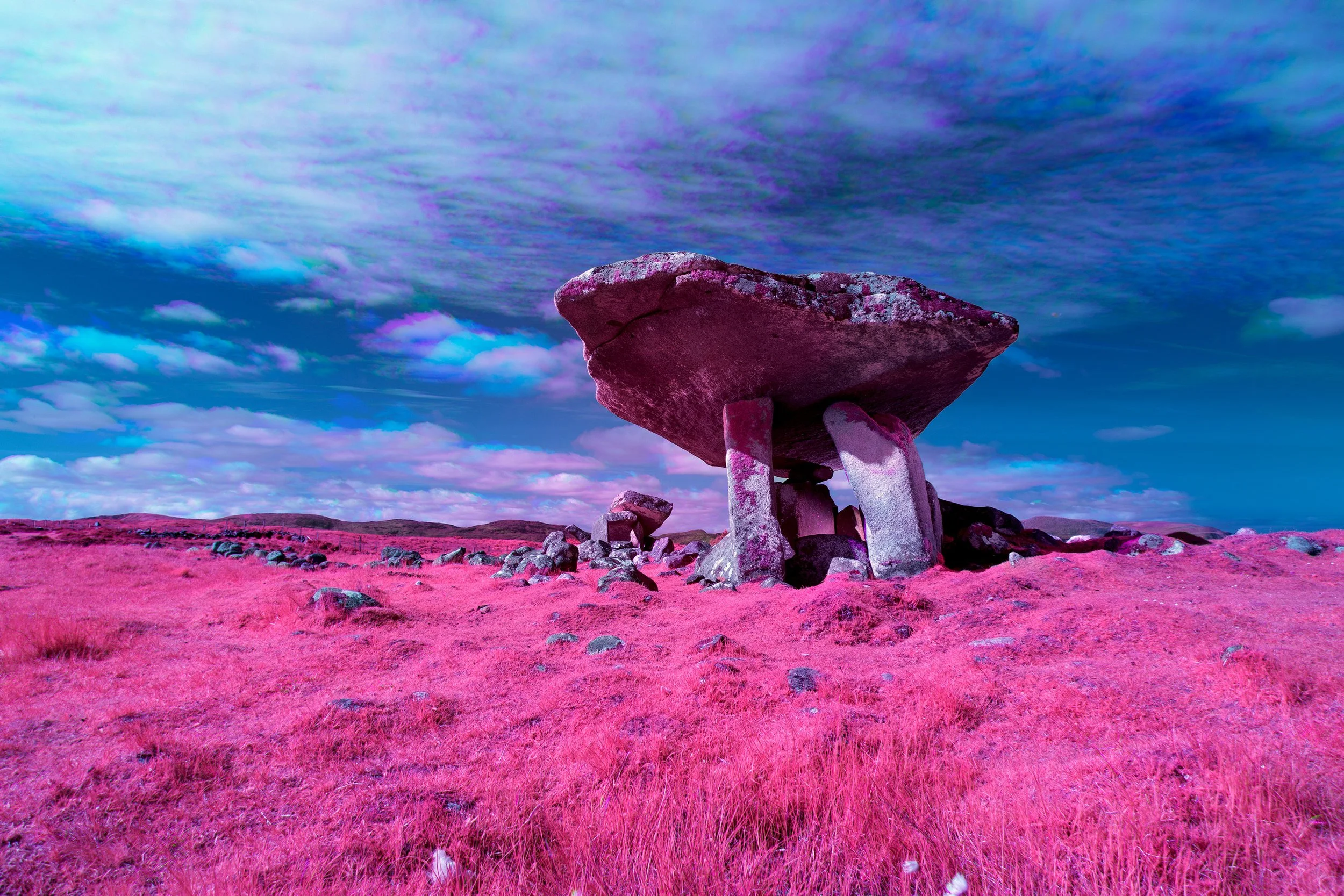
Image 2 | The Dolmen
Next I headed to Donegal to shoot the breathtaking Kilclooney Dolmen, an ancient portal tomb. It wasn’t in the deliverables list but I really wanted to see it and I had some time to kill. Why it was built we don’t know, but I found a nice quote in Portnoo: A Corner in the Donegal Highlands by R. Baillie:
“Of their origin we know nothing. They may have been monuments erected over the mighty dead; or memorials of great events that took place where they stand. But as we look on them, still standing in their silent strength, and defying all our efforts to pierce the mysteries of the long buried past, one voice we seem to hear, and it is that which cries: ‘All flesh is as grass, and all the glory of man as the flower of the field.'”
Which is lovely.
I again used Infrared to highlight the grass and moss in the scene in bright tones, while the stone remained natural, steadfast while all life around it dies and renews. I then shot a timelapse of the scene to get the clouds moving in the sky to make timestacks, which is where stills are layered on top of one another, showing only the brightest part of any image. I made three individual timestacks, and then moved onto the next fun technique which is something I’ve been toying with for years and I call an RGB time-split.
Some of the earliest colour photographs were made by shooting three images of the same subject, with all light filtered out apart from red, green and blue in each subsequent image, and then projecting the three channels through coloured film to combine them. Where the light stays the same objects are rendered normally, but if light changes in an area (which would’ve mostly been due to movement) a vibrant, unpredictable pop of colour is revealed. Just like the ancient Irish language unlocks new ways to see the world, with this technique colour is brought to life while time elapses, only visible by exploiting a flaw in an old technique. For the photograph of the dolmen the effect is subtle, but it’s a little more obvious in shot 3.
Image 3 | The sea cliffs
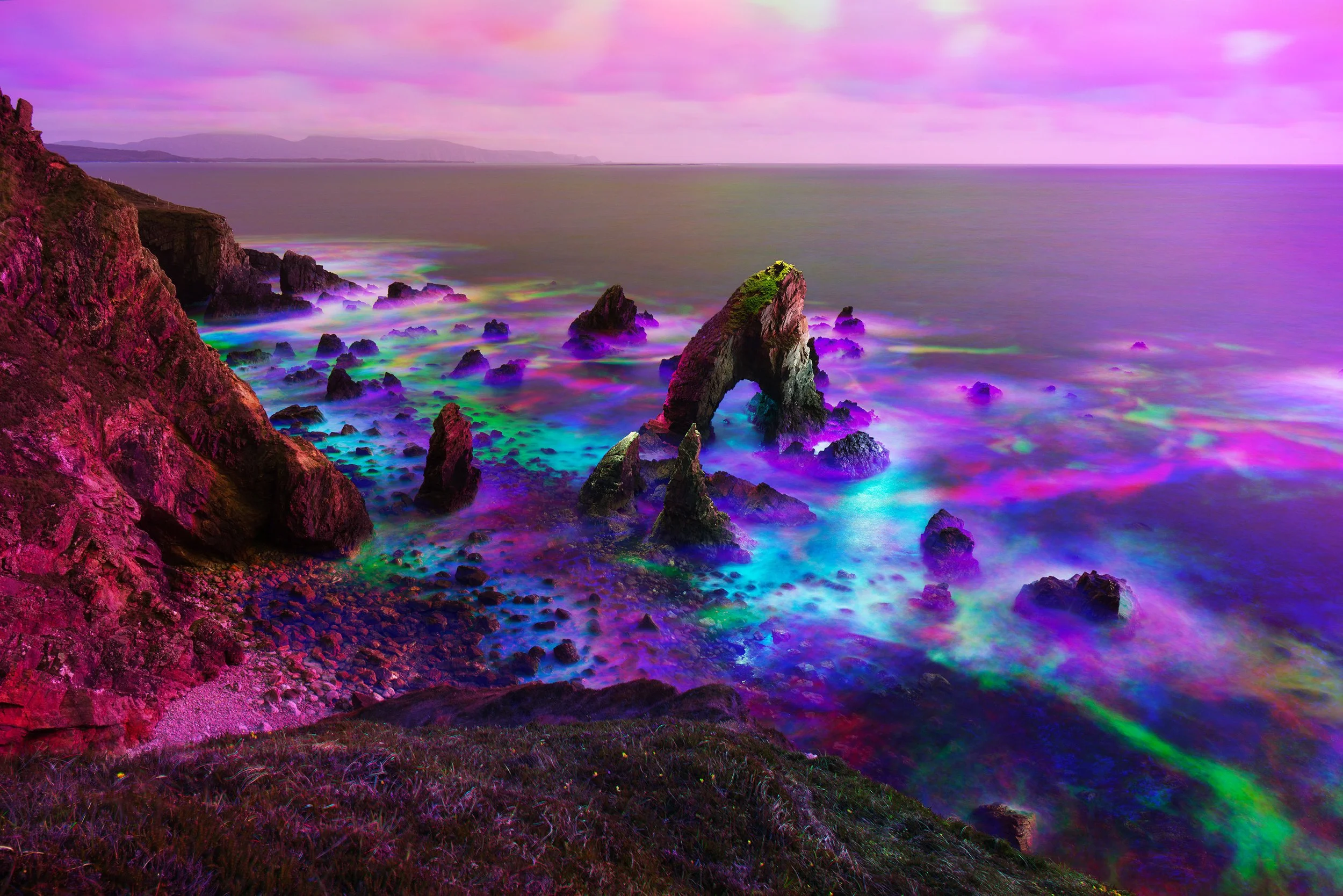
Next up, the incredible Crohy Head Sea Arch in the Gaeltacht, also in Donegal. The plan was to do a proper RGB time split, so I found my angle and started shooting with the sun’s path in mind, capturing the scene as the light changed from full sun at 4PM until it was finally fully dark at 23:30. The camera has to stay still for the duration so you have to decide where the light is going to be best over the course of 7+ hours. I also attached small lights to a Mavic 2 to light-paint the sea arch in long exposures once it got dark, which I found to be the most exciting way to shoot a landscape because the sensors on the drone stop working in the pure black darkness. And I’m not very good at drones.
I then made three individual photographs. Image 1 was a blend of evening light and drone light. The drone light functioned mostly as a constant to keep some of the image’s colour natural, but also allowed for ethereal super long exposures of the water at night. Image 2 was a mishmash of harsh daylight to show the rougher, sharper, choppy water and a long exposure from later in the day. Image 3 was a darker blend of long nighttime exposures and drone light. By themselves they’re grand, but once I isolated just the red channel for image 1, just blue for image 2 and just green for image 3 and laid them over one another, things got interesting. Even just the movement in the grass caused incredibly beautiful textures.
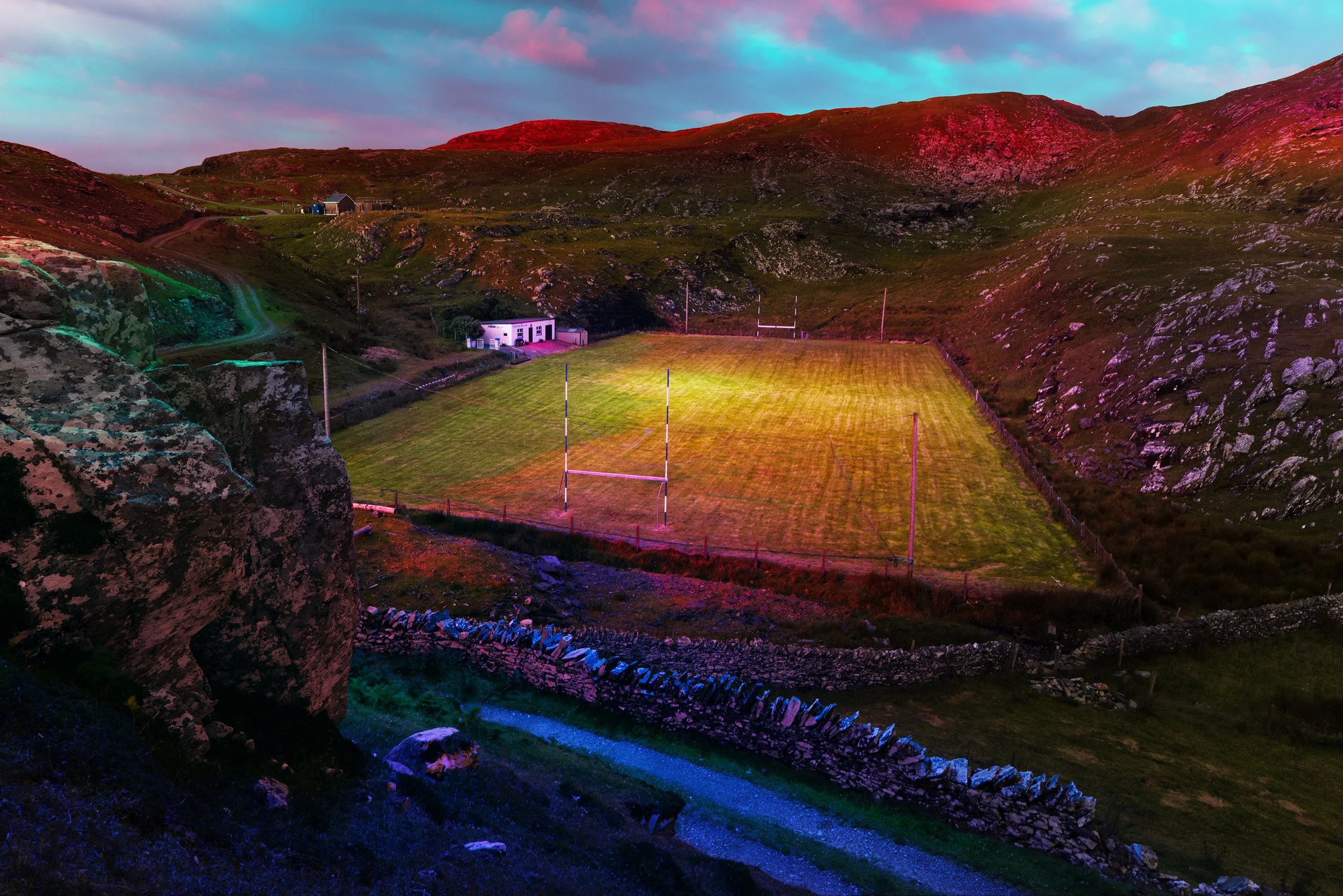
Image 4 | The inishturk gaa pitch
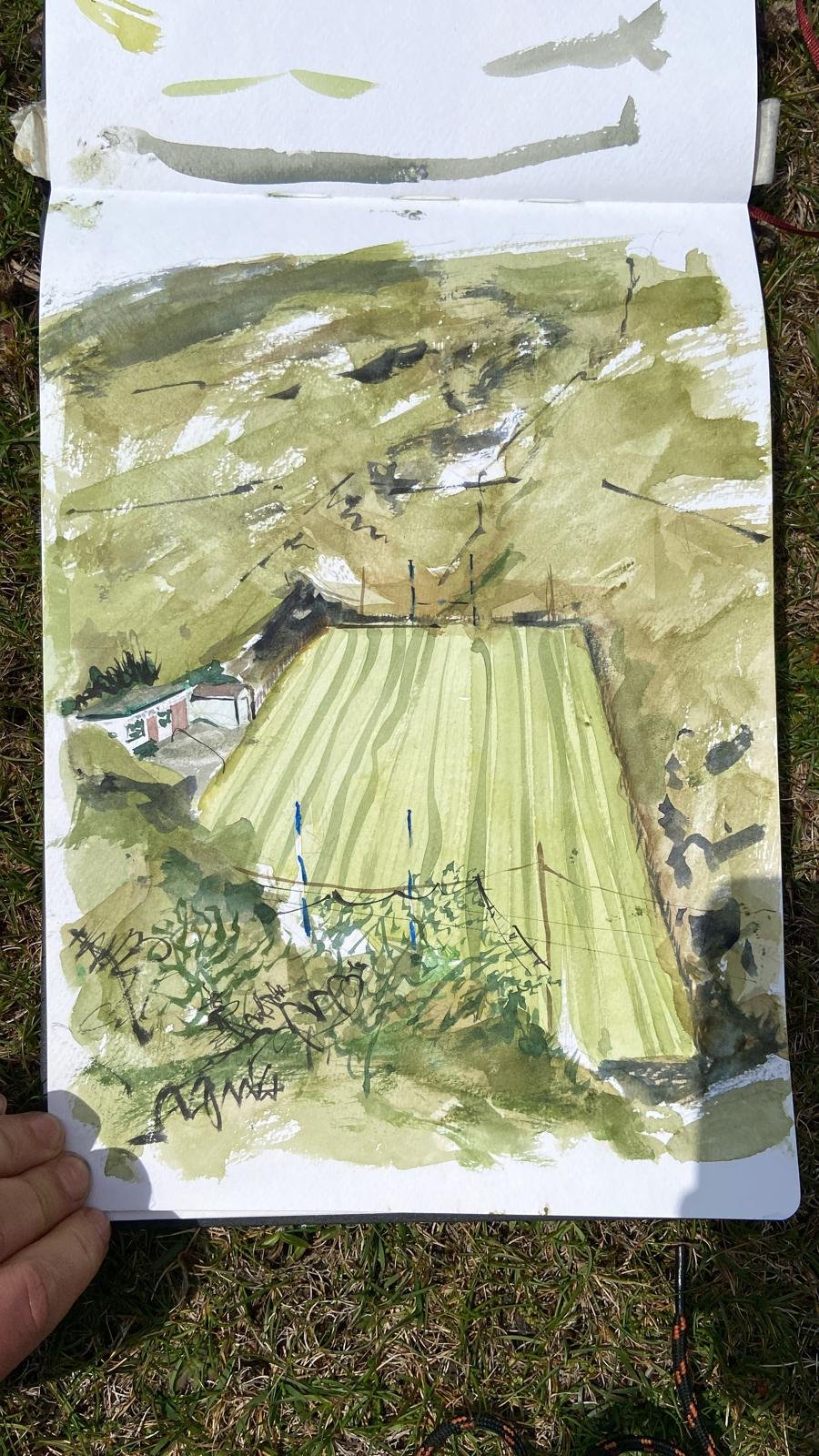
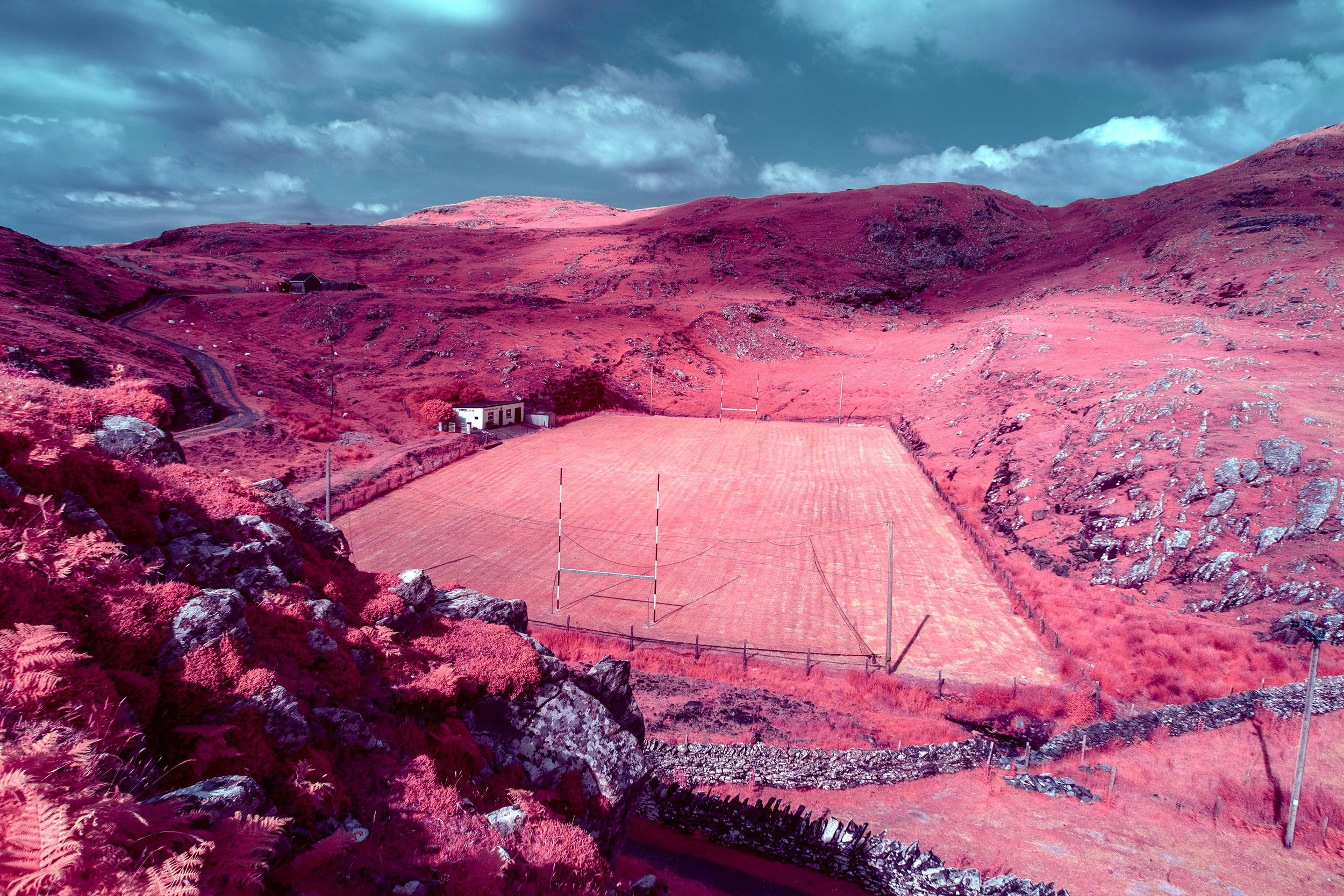
My super talented brother joined me to shoot the final still on Inishturk, which is home to the most beautiful GAA pitch I’ve ever seen. We knew we’d be there for a while so Van brought some comforts but getting everything to the location took some doing. I used the same technique again, shooting when the light was interesting, especially when the sun only illuminated smaller sections of the scene. I then used the drone and lights to pick out points of interest. This was again three individual stills from different parts of the day, each image making up one of three channels, revealing hidden colour.
I wasn’t sure that I could light paint the entire scene in the cold and wind with the drone batteries I had, so I shot infrared as a backup, which actually turned out beautifully. Van also did some great paintings of the scene.I really enjoyed the process of making these images from ideation through to post. It was refreshing to have permission from a client to just try stuff outside of the normal strict process of advertising based creative work, and I look forward to continuing this project and shooting more just for myself.